Orthodontic treatment corrects irregularities in the position of the teeth and jaws using fixed or removable appliances. When force is applied in a specific direction over a period of time, the teeth move slowly through the bone.
This page explains, for information purposes, how treatment is carried out, what options are available and how the process progresses. The right treatment for you can only be determined after an examination and orthodontic records.
When is it considered?
- Crowded teeth and lack of space
- Gaps between teeth
- Protruding upper front teeth
- A lower jaw positioned too far forward or back
- Front teeth that do not meet (open bite)
- Upper teeth covering the lower teeth excessively (deep bite)
- Crossbite
- Bringing impacted or unerupted teeth into position
What are the treatment options?
| Option | How it works | Points to note |
|---|---|---|
| Metal braces | Brackets bonded to the tooth surface and a wire | Visible; allows a wide range of movements |
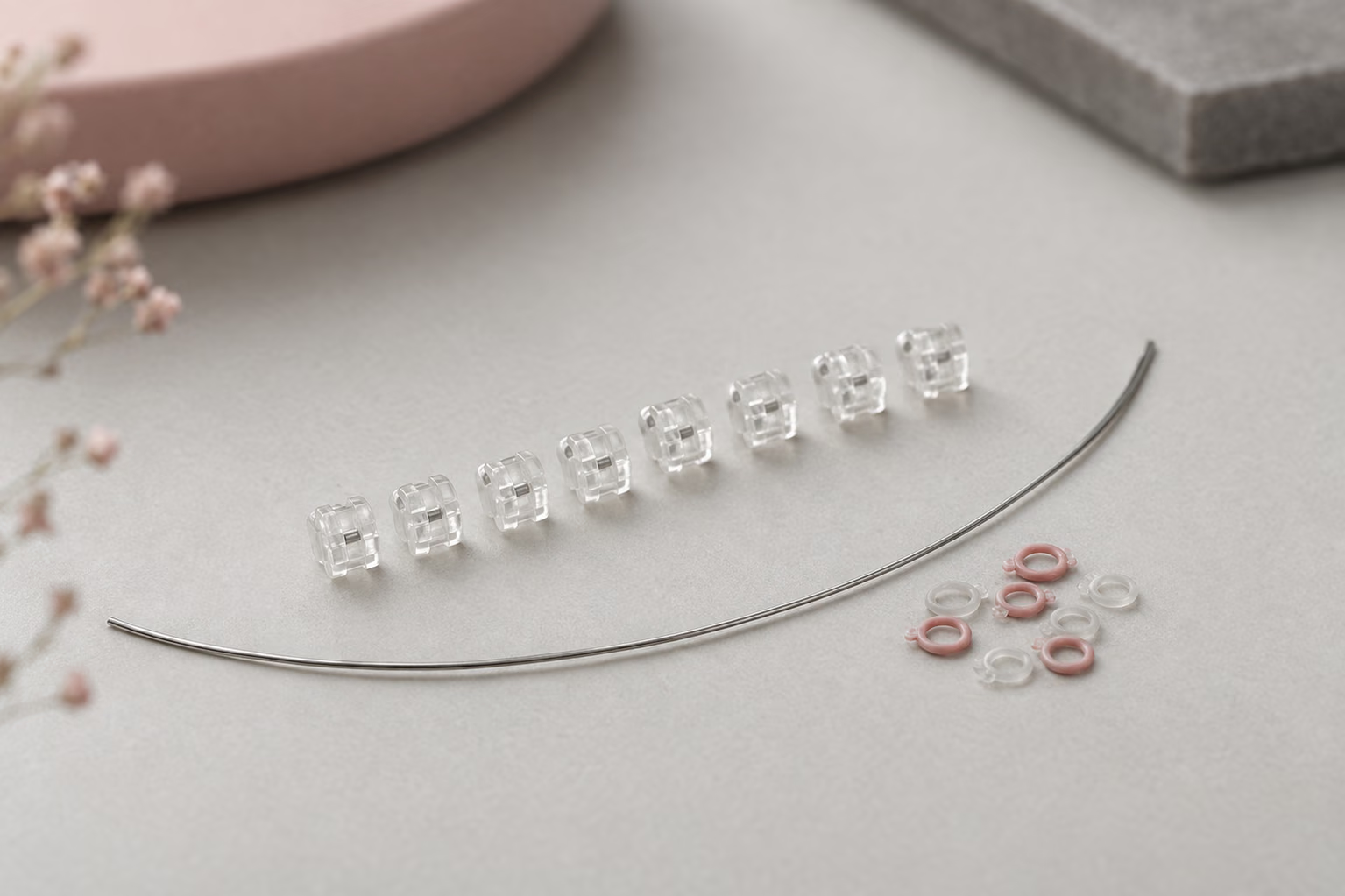
| Ceramic braces | Tooth-coloured brackets | Less noticeable; more prone to breakage |
| Lingual braces | Brackets placed on the back surface of the teeth | Not visible from outside; longer adjustment period |
| Clear aligners | A series of clear appliances changed in sequence | Ineffective if the daily wearing time is not followed |
The choice is based not only on appearance but on the movements that need to be made.
How does treatment progress?
- Examination and records. Intraoral examination, photos, impressions and X-rays (panoramic and cephalometric) are taken.
- Preliminary treatment. Any decay or gum disease is treated first and the teeth are cleaned. If space is needed, tooth extraction may be considered.
- Planning. The intended movements and treatment duration are determined and the options are discussed.
- Fitting the appliance. The brackets are bonded or the first set of aligners is provided.
- Check-ups. Usually every 4–8 weeks, the wire is changed, adjustments are made or a new set of aligners is provided.
- Completion. The appliances are removed and the tooth surfaces are cleaned.
- Retention. A fixed or removable retainer is fitted and regular check-ups continue.
Why is retention essential?
The bone and connective tissue around the teeth tend to pull them back until they have fully adapted to the new position. A retainer prevents this.
- A fixed retainer is bonded to the back surface of the teeth and is not visible
- A removable retainer is worn for the hours specified by your dentist
- In most cases, retainers are worn for a long time
- Tartar can build up around a fixed retainer; check-ups are needed
Oral care during treatment
| Topic | Recommendation |
|---|---|
| Brushing | After every meal; clean around the brackets separately |
| Between teeth | Use interdental brushes and orthodontic floss |
| Foods to avoid | Hard nuts, ice, caramel, chewing gum |
| Fruit and vegetables | Cut into small pieces before eating |
| Check-ups | Attending appointments regularly directly affects the duration |
| Broken bracket | Tell your dentist without delay |
Risks and possible problems
- White spots and decay due to plaque build-up around brackets
- Gum inflammation and swelling
- Shortening of the root tips (root resorption)
- Irritation of the inside of the cheeks and lips
- Temporary jaw joint complaints
- Teeth moving back after treatment (if a retainer is not worn)
This list is not exhaustive. Your individual risks are discussed during the examination and the informed consent process.
What should patients travelling from abroad consider?
Orthodontic treatment usually lasts from 6 months to 3 years, with check-ups generally every 4–8 weeks, followed by long-term retention. Because of these regular appointments, continuity of care needs to be planned before treatment starts. A plan can be made only after an in-person examination and orthodontic records, including X-rays.
| Topic | What to know |
|---|---|
| Duration | Usually 6 months – 3 years, depending on the case |
| Check-ups | Usually every 4–8 weeks throughout treatment |
| Before you travel | Recent X-rays, photos and dental records can be shared in advance |
| Decision | The plan is made only after examination and records |
| Back home | Follow-up, retainer checks and cleaning with a local dentist need to be arranged |
About treatment fees
This page does not include fee information. The scope and duration of orthodontic treatment and the type of appliance chosen vary greatly from person to person; fees can only be discussed after an examination and records, once an individual treatment plan has been prepared.