Implants & Prosthetics
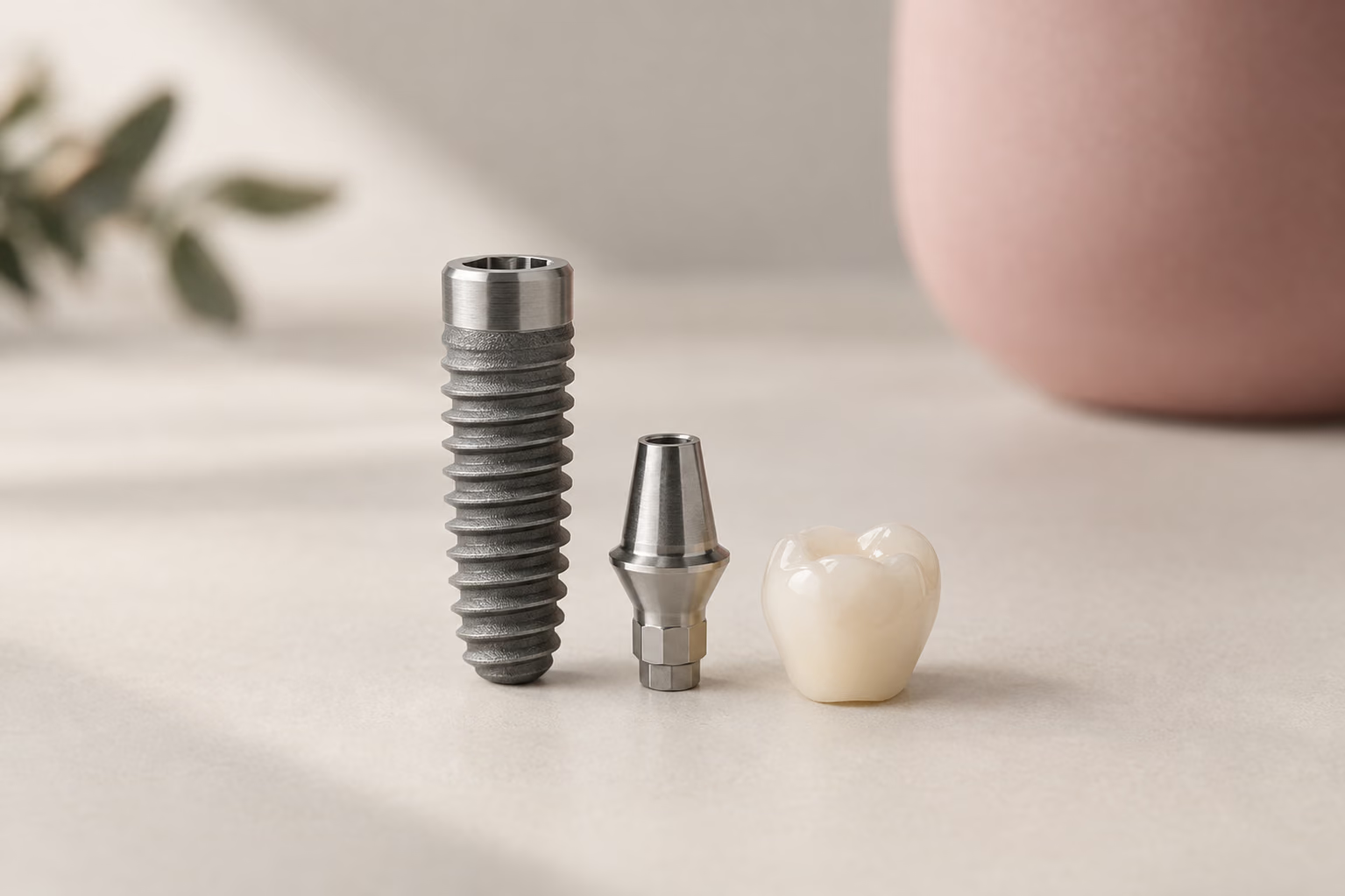
01Surgical and prosthetic options for replacing missing teeth.
View DetailsDt. Emre Ersaçan provides implant, crown and veneer, orthodontic, root canal and gum treatments at his practice in Bostanlı, Karşıyaka. The pages on this site explain how each treatment works, who it suits and what recovery looks like.
Opening hours
Turkey time (UTC+3)
The practice was founded in 2006 by Dt. Emre Ersaçan, a graduate of Ege University Faculty of Dentistry. The figures below are verifiable dates and facts, not claims.
2004
Graduated from Ege University Faculty of Dentistry
2006
Practice founded in Bostanlı, Karşıyaka
20+
Years of practice in Bostanlı, Karşıyaka
14
Treatments explained in detail on this site
2005
ITI Straumann dental implant certificate
Each treatment page explains how the procedure is done, who it is suitable for, when it is not, and how recovery progresses.
Surgical and prosthetic options for replacing missing teeth.
View DetailsTreatments concerning the colour, shape and alignment of teeth.
View DetailsCorrecting the position of teeth and jaws with fixed or removable appliances.
View DetailsFillings, root canal treatment and professional cleaning to preserve natural teeth.
View DetailsDiagnosis and treatment of gingivitis and periodontal disease.
View DetailsTooth extractions and impacted wisdom tooth surgery.
View Details
Dt. Emre Ersaçan
Dentist · Karşıyaka, Izmir
Graduated from Ege University Faculty of Dentistry in 2004. Completed the ITI Straumann dental implant certificate programme in 2005 and attended implantology and prosthodontics courses in Zurich, Tel Aviv and Seoul. Completed the advanced periodontology and implantology pre-master programme run jointly by the University of Genoa and Ankara University (2015–2016). Has worked at his own practice in Bostanlı, Karşıyaka since 2006.
Your complaint and expectations are heard, followed by an oral examination. No treatment is decided before this step.
Panoramic X-rays or 3D tomography are requested when needed, and gum health and jaw bone are assessed separately.
Options, duration and possible risks are discussed with you before treatment begins.
Check-ups are scheduled after treatment. The interval depends on the procedure performed.
Existing X-rays and records can be shared in advance. The number of visits is discussed once your plan is clear.
The video loads from YouTube only when you press play; YouTube may then set its own cookies. See the Cookie Policy for details.
What is a dental implant, how is it placed, who is it suitable for and how long does healing take? Information on the stages, risks and aftercare of implant treatment.
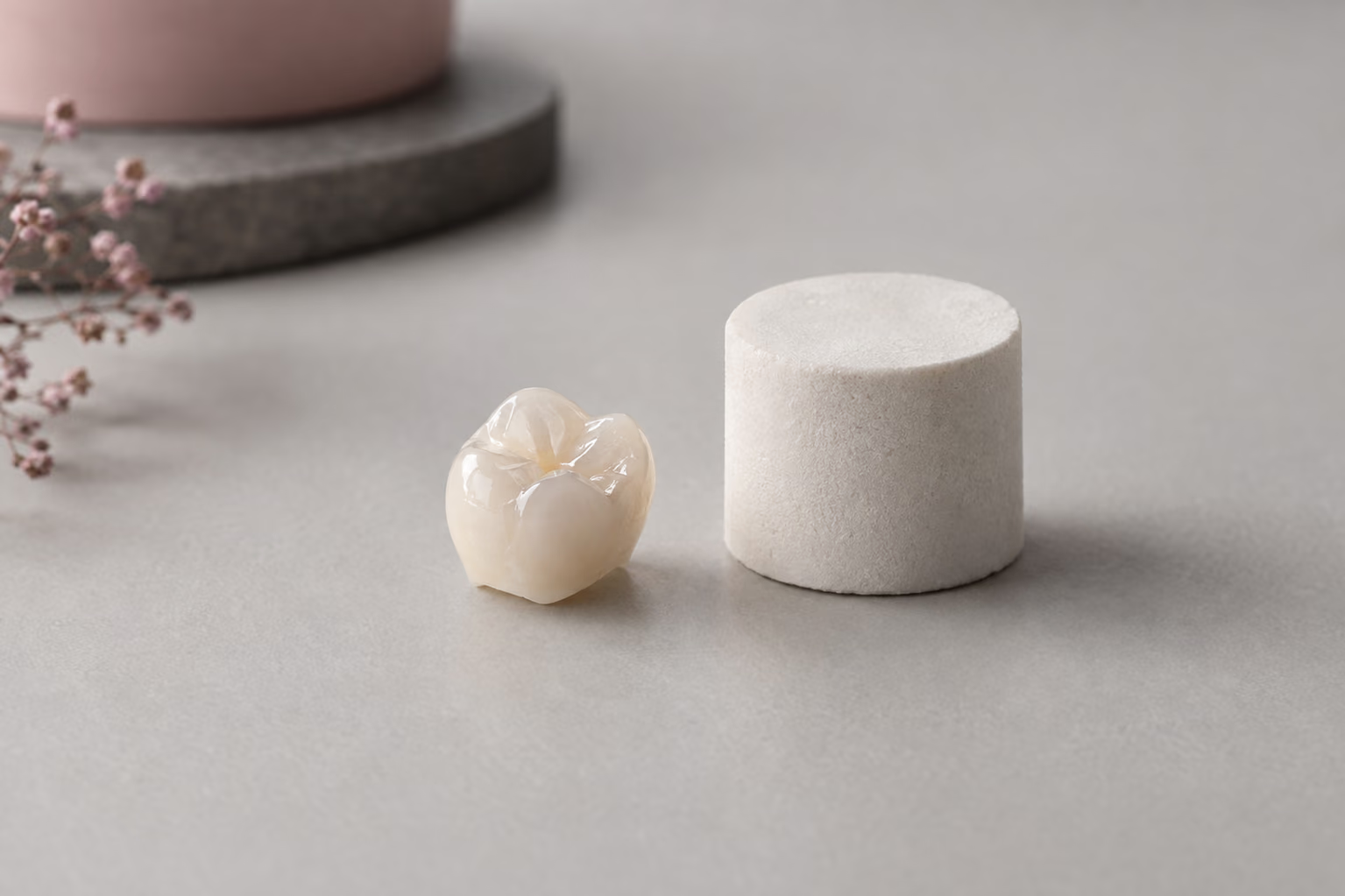
What is a zirconia crown, when is it chosen and how does it differ from a metal-ceramic crown? Information on the treatment stages, durability and aftercare.
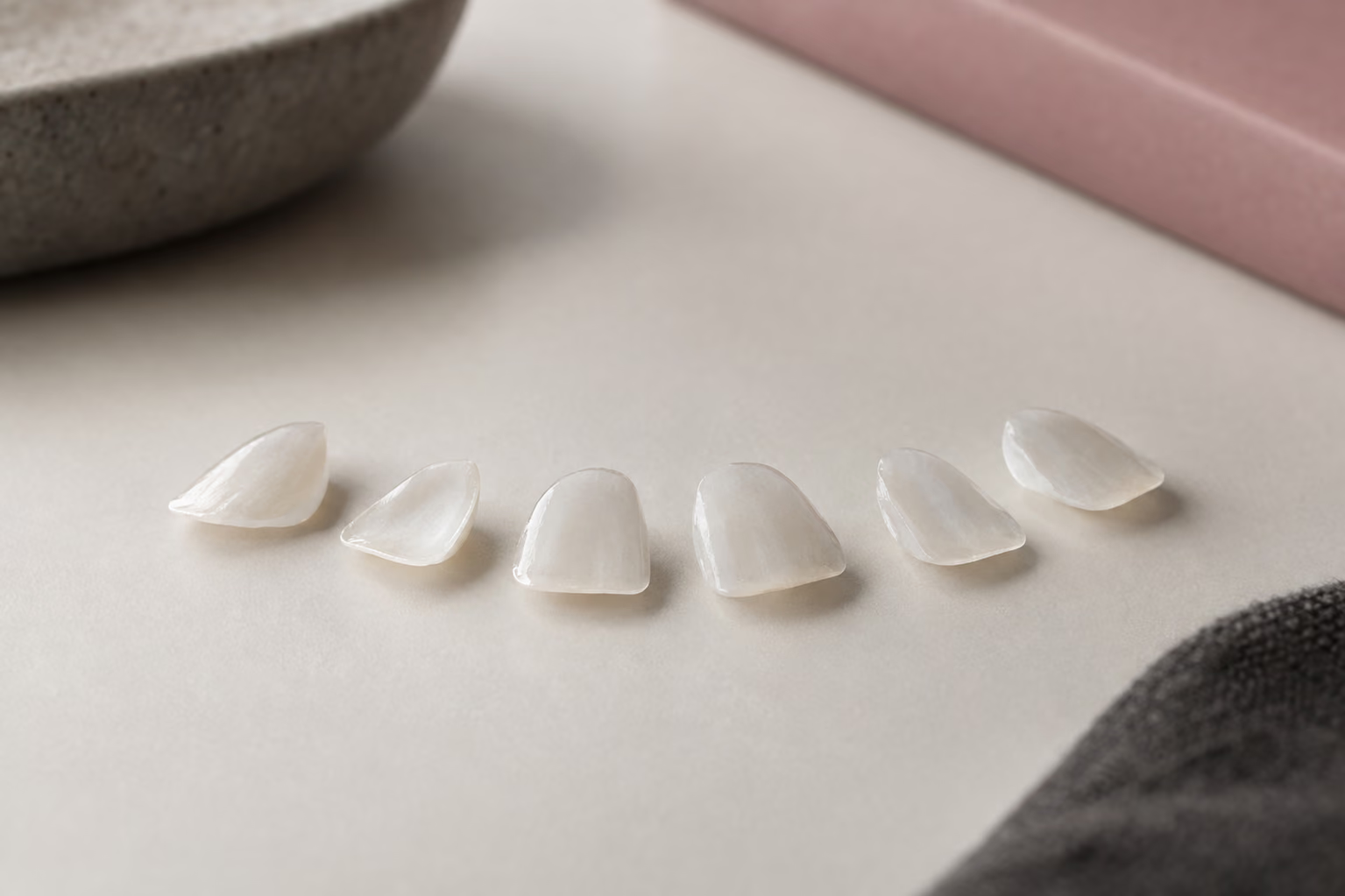
What is a porcelain laminate veneer, when is it used and who is it not suitable for? Information on the treatment stages, durability and aftercare of veneers.
Answers to common questions about dental visits, treatment planning and travelling for care.
For adults with healthy teeth and gums, a check-up every six months is usually recommended. With gum disease, a tendency to tooth decay, smoking or conditions such as diabetes, the dentist may ask to see you more often. The interval depends on your individual risk level.
Yes. The early stages of tooth decay and gum disease usually cause no pain, so they are only noticed during an examination and, where needed, on an X-ray. Pain is often a sign that the problem has already progressed.
Not for every procedure. For dental implants, root canal treatment, removal of impacted teeth and advanced gum treatment, however, the jawbone and root structure need to be imaged. In these cases a panoramic X-ray or a three-dimensional CT scan (CBCT) is requested.
Most dental procedures are carried out under local anaesthesia, and pain is not expected during the procedure itself. Once the anaesthetic wears off, mild sensitivity or pain may occur; how strong it is depends on the procedure and on the person.
It depends on the procedure. Fillings and scaling are usually completed in a single visit; root canal treatment takes one or two visits, while implant treatment, including healing time, can take several months. The exact duration is set out in the treatment plan drawn up after the examination.
The Turkish Regulation on Advertising and Information in Health Services does not allow healthcare providers to publish treatment fees for promotional purposes. In addition, every treatment plan is individual; fees can only be discussed after an examination and, if needed, a radiological assessment.
Yes. Children can be assessed for preventive care, treatment of tooth decay and irregularly positioned teeth. The first orthodontic assessment should ideally be carried out during the period when milk teeth and permanent teeth are present together.
Whether a treatment is suitable can only be decided after an examination and, where needed, imaging. Contact the clinic to plan your first visit.